Civil Engineering Design Software - List of Manufacturers, Suppliers, Companies and Products | IPROS

Civil Engineering Design Software Product List

1~30 item / All 51 items

Displayed results

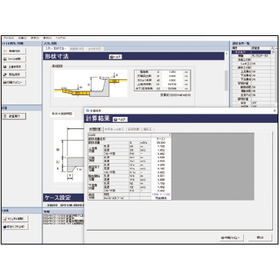
Civil engineering design software "Design of Box Culverts"

We can also accommodate vertical considerations, wing design, and angled boxes!

"The design of box culverts" is a civil engineering software that can design single box, double box, and two-layer boxes. It can also accommodate vertical considerations, wing design, and angled boxes. The foundation types supported include direct foundations, uniformly distributed springs, and pile foundations. 【Features】 ■ Capable of designing single box, double box, and two-layer boxes ■ Foundation types supported include direct foundations, uniformly distributed springs, and pile foundations *For more details, please refer to the PDF materials or feel free to contact us.

  • Other Software
  • Civil Engineering Design Software

Added to bookmarks

Bookmarks list

Bookmark has been removed

Bookmarks list

You can't add any more bookmarks

By registering as a member, you can increase the number of bookmarks you can save and organize them with labels.

Free membership registration

Civil engineering design software "Design of Self-Supporting Sheet Piles (Coastal and Waterway)"

We will perform calculations for the required embedment length of sheet pile revetments and sheet pile waterways, as well as stress calculations and displacement calculations.

The "Design of Self-Supporting Sheet Pile (Revetted Bank and Waterway)" is a civil engineering design software that can perform calculations for the required embedment length of sheet pile revetments and sheet pile waterways, as well as stress and displacement calculations, based on the "Design Guidelines for Disaster Recovery Works." For sheet pile revetments, assessments can be conducted for both normal conditions and during earthquakes, while for sheet pile waterways, assessments can also be made for liquefaction scenarios. Additionally, it allows for the registration of steel material data and calculations using arbitrary steel materials. 【Features】 ■ Based on the "Design Guidelines for Disaster Recovery Works" ■ Assessments for normal conditions and earthquakes are possible (sheet pile revetment) ■ Assessments for liquefaction scenarios are possible (sheet pile waterway) ■ 3D structural diagrams can be displayed ■ Design documentation can be created based on calculation results *For more details, please refer to the PDF materials or feel free to contact us.

  • Other Software
  • Civil Engineering Design Software

Added to bookmarks

Bookmarks list

Bookmark has been removed

Bookmarks list

You can't add any more bookmarks

By registering as a member, you can increase the number of bookmarks you can save and organize them with labels.

Free membership registration

Civil engineering software "Design of Rockfall Protection Walls"

We will perform stability calculations for cases of falling, sliding, and bearing capacity during sediment accumulation and collisions with protective fences.

The "Rockfall Protection Retaining Wall Design" is a civil engineering design software that allows for the design of rockfall protection retaining walls based on the "Rockfall Countermeasure Handbook." It accommodates various shapes such as gravity type, cantilever type, and arbitrary types, and performs stability calculations for overturning, sliding, and bearing capacity under various cases including normal conditions, during earthquakes, wall collisions (during rockfall), sediment accumulation, and protective fence collisions (during rockfall). Additionally, it can calculate the cover depth of protective fence posts and examine the energy absorption of protective fences. 【Features】 ■ Capable of designing rockfall protection retaining walls based on the "Rockfall Countermeasure Handbook" ■ Can consider vertical, horizontal, and moment loads as arbitrary loads ■ Allows specification of calculation positions for vertical walls ■ Enables examination of the cover depth of protective fence posts ■ Can display cross-sectional shape diagrams and overall shape diagrams on the screen *For more details, please refer to the PDF materials or feel free to contact us.

  • Other Software
  • Civil Engineering Design Software

Added to bookmarks

Bookmarks list

Bookmark has been removed

Bookmarks list

You can't add any more bookmarks

By registering as a member, you can increase the number of bookmarks you can save and organize them with labels.

Free membership registration

Civil engineering software "Design of Waiting Retaining Walls"

The back shape can be selected from cut slope retaining walls and fill slope retaining walls! Rockfall protection fence calculations are also possible.

The "Design of Retaining Walls" is a civil engineering design software that accommodates gravity type, gravity type (with additional backfill concrete), cantilever type, and arbitrary types, and can perform stability calculations against overturning, sliding, and support under normal conditions, during earthquakes, during impact from collapsing soil, and during soil accumulation. The design of retaining walls is based on the "Legal Materials Related to the Promotion of Disaster Prevention Measures in Sediment Disaster Warning Areas," "Design Calculation Examples of Retaining Walls Considering Impact Forces and Amounts of Collapsing Soil," and "Design and Examples of New Slope Failure Prevention Works." 【Features】 ■ The back shape can be selected from cut slope retaining walls or fill slope retaining walls. ■ Consideration of front and back water levels is possible. ■ Earth pressure calculations are performed using the trial wedge method. ■ The internal friction angle (φ) of collapsing soil and deposited soil can be input separately. ■ Output samples and a trial version are available. ■ The bearing capacity coefficient can be changed arbitrarily. ■ Screen display of cross-section shape diagrams and overall shape diagrams is possible. ■ 3D structural diagrams can be displayed. *For more details, please refer to the PDF materials or feel free to contact us.

  • Other Software
  • Civil Engineering Design Software

Added to bookmarks

Bookmarks list

Bookmark has been removed

Bookmarks list

You can't add any more bookmarks

By registering as a member, you can increase the number of bookmarks you can save and organize them with labels.

Free membership registration

Civil engineering design software "Design of U-shaped Retaining Walls"

Supports both excavated U-shaped retaining walls and fill-type U-shaped retaining walls!

The design of U-shaped retaining walls is a civil engineering design software that can perform U-shaped retaining wall design based on guidelines such as "Road Earthworks Retaining Wall Construction Guidelines" and "Land Improvement Project Planning Design Standards (Farm Roads)." The U-shaped retaining wall types include the cut-and-cover U-shaped retaining wall used at the junctions of cut roads and grade-separated intersections, and the infill U-shaped retaining wall used at the junctions with elevated structures like bridges. The software includes stability calculations for direct foundations, stability calculations for pile foundations, and component design. Additionally, it allows for the examination of the thickness of improved layers that satisfy allowable bearing capacity and ultimate bearing capacity. 【Features】 ■ The cut-and-cover type can accommodate asymmetrical cross-sections, while the infill type can accommodate symmetrical cross-sections. ■ Heights of up to 20m and base widths of up to 70m can be considered. ■ It can accommodate both cut-and-cover and infill retaining walls. ■ It is compatible with pile foundations. ■ Earthquake considerations are possible. *For more details, please refer to the PDF materials or feel free to contact us.

  • Other Software
  • Civil Engineering Design Software

Added to bookmarks

Bookmarks list

Bookmark has been removed

Bookmarks list

You can't add any more bookmarks

By registering as a member, you can increase the number of bookmarks you can save and organize them with labels.

Free membership registration

Civil engineering design software 'SECT-RC RC Section Design'

It is possible to perform section checks that correspond to the "partial coefficient method" in the Road Bridge Design Guidelines (H29 edition).

"SECT-RC RC Cross-Section Design" is a civil engineering design software that can perform four types of performance checks: allowable stress method, limit state design method, seismic design method, and partial coefficient method. The increase in allowable shear stress can be selected to be considered or not in the stress calculation. The consideration of shear span ratio is also possible. Additionally, changes in concrete stress-strain for column members and the allowable tensile strain for reinforcement can be taken into account. [Check Contents] ■ Allowable Stress Method Assumes concrete members as elastic bodies and checks that the stress is within allowable limits. ■ Limit State Design Method A design method that evaluates performance rationally using safety factors. ■ Seismic Design Method A design method that statically designs loads due to earthquakes, considering the deformation performance in the nonlinear range of structures based on the Road Bridge Design Specifications (2012 edition). ■ Partial Coefficient Method Based on the Road Bridge Design Specifications (2017 edition), it performs durability and load-bearing performance checks for reinforced concrete cross-sections. *For more details, please refer to the PDF materials or feel free to contact us.

  • Other Software
  • Civil Engineering Design Software

Added to bookmarks

Bookmarks list

Bookmark has been removed

Bookmarks list

You can't add any more bookmarks

By registering as a member, you can increase the number of bookmarks you can save and organize them with labels.

Free membership registration

Civil engineering design software "Drainage Design / Drainage Design (Light Version)"

Calculate the catchment area and channel length, and compute the rainwater runoff! Based on this runoff, we will determine the flow capacity of the drainage section.

"Drainage Design / Drainage Design (Light Version)" is a civil engineering design software that can determine the flow capacity of drainage sections set in each watershed. It also allows for the examination of flow through culvert sections, the spacing of drainage inlet installations, and the calculation of underground drainage volume. Furthermore, flow velocity calculations can be selected from the "Manning's equation" or "Culvert equation." 【Features】 ■ Calculates catchment area and flow path length by setting the catchment area, and computes rainwater runoff volume. ■ Based on the runoff volume, it can determine the flow capacity of drainage sections. ■ Allows for the examination of flow through culvert sections, the spacing of drainage inlet installations, and the calculation of underground drainage volume. ■ By registering, you can call up sections when inputting "runoff volume," "flow capacity," and "culvert flow." (Sections that can be registered) - Rectangular (Hanch, r-shape, invert) - Circular - Standard horseshoe - Arbitrary horseshoe - Hollow (I) - Hollow (II) - U-shaped (r, Hanch, bottom R) - U-shaped (U-shaped ditch, bench flume) - Free slope ditch - Road gutter - DO pipe - Oval pipe * For more details, please refer to the PDF materials or feel free to contact us.

  • Other Software
  • Civil Engineering Design Software

Added to bookmarks

Bookmarks list

Bookmark has been removed

Bookmarks list

You can't add any more bookmarks

By registering as a member, you can increase the number of bookmarks you can save and organize them with labels.

Free membership registration

Civil engineering design software "Design of Inverted T-Type Abutments"

Design considering partial coefficients is possible! Arbitrary loads can handle concentrated loads, distributed loads, and moment loads.

"The design of reverse T-type abutments" is a civil engineering software that allows for the design of reverse T-type abutments based on the Road Bridge Design Guidelines (2017) using the partial coefficient method. When the ground is determined to be subject to persistent and variable actions, as well as liquefaction, a check for Level 2 seismic motion is conducted. Additionally, the earth pressure coefficients can accommodate Coulomb, modified Mohr-Coulomb, Okabe (optional), and simplified methods from the guidelines. 【Features】 ■ Design that considers partial coefficients ■ Design for conditions dominated by persistent actions, variable actions, and accidental actions ■ The earth pressure used in the design corresponds to the following methods: - Earth pressure only - Earth pressure + triangular water pressure - Earth pressure + residual water pressure ■ Arbitrary loads can include concentrated loads, distributed loads, and moment loads ■ Superimposed loads can be set up to three types, including snow loads ■ A diagram of the approach area behind the abutment can be created *For more details, please refer to the PDF document or feel free to contact us.

  • Other Software
  • Civil Engineering Design Software

Added to bookmarks

Bookmarks list

Bookmark has been removed

Bookmarks list

You can't add any more bookmarks

By registering as a member, you can increase the number of bookmarks you can save and organize them with labels.

Free membership registration

Civil engineering design software "Calculation of Natural Period"

You can perform calculations for the natural period and strength verification based on the number of digits.

The "Calculation of Natural Period" is a civil engineering design software that calculates the natural period based on the "Design Guidelines for Road Bridges (2017)" and allows for the computation of design seismic intensity, inertial forces, and more. In the case of perpendicular directions, calculations are only performed under conditions where multiple substructures support the vibration units. By inputting standard cross-sections, the software automatically calculates the cross-sectional area, second moment of area, and torsional constant of the superstructure. 【Features】 ■ Calculates the natural period and performs strength checks based on the girder span length. ■ The natural period is calculated based on the design seismic intensity units. ■ Capable of calculating design horizontal seismic intensity, inertial forces, and more. ■ In the case of perpendicular directions, calculations are only performed under conditions where multiple substructures support the vibration units. ■ Supports calculations multiplied by dead load coefficients, with the option to choose whether or not to apply the dead load coefficient. *For more details, please refer to the PDF materials or feel free to contact us.

  • Other Software
  • Civil Engineering Design Software

Added to bookmarks

Bookmarks list

Bookmark has been removed

Bookmarks list

You can't add any more bookmarks

By registering as a member, you can increase the number of bookmarks you can save and organize them with labels.

Free membership registration

Civil engineering design software "Design of RC Pier"

Design of single-column RC bridge piers using load factors and partial factors method.

The "RC Pier Design" is a civil engineering design software based on the Road Bridge Design Guidelines and Commentary (November 2017). It consists of the calculation of acting forces, stability calculations for direct foundations and pile foundations, design of beams, columns, bottom slabs, and bridge seats. It introduces load coefficients (γp, γq) and the partial coefficient method introduced in the Road Bridge Design Guidelines of November 2017, allowing for design under permanent and variable actions, Level 2 seismic motions, and accidental actions considering collision loads. 【Features】 - Design of single-column RC piers using load coefficients and partial coefficient methods is possible. - Considers flow pressure and hydrodynamic pressure during earthquakes. - Asymmetric beams in the direction perpendicular to the bridge axis are possible. - Steps can be incorporated in the bridge axis direction. - The results of acting force aggregation can be confirmed on the screen. *For more details, please refer to the PDF materials or feel free to contact us.

  • Architectural Design Software
  • Civil Engineering Design Software

Added to bookmarks

Bookmarks list

Bookmark has been removed

Bookmarks list

You can't add any more bookmarks

By registering as a member, you can increase the number of bookmarks you can save and organize them with labels.

Free membership registration

Civil engineering software "Seismic Design of Pile Foundations"

We will conduct a verification of the pile foundation using the seismic lateral resistance method for a Level 2 earthquake.

The 'Seismic Design of Pile Foundations' is a civil engineering design software that allows for the verification of pile foundations during Level 2 earthquakes, based on the Road Bridge Design Guidelines and their Commentary (November 2017). It can perform calculations in conjunction with the H29 Road Design compliant versions of 'Design of RC Bridge Piers' and 'Design of Reverse T-Type Abutments.' Additionally, it can also examine liquefaction. 【Features】 ■ Conducts liquefaction assessment during earthquakes and calculates reduction factors De for Level 1 and Level 2 ■ Allows selection between determining FL values based on average or minimum values ■ Supports input of up to 30 layers and 80 N values ■ Capable of verifying pile foundations during Level 2 earthquakes ■ Also able to examine liquefaction *For more details, please refer to the PDF materials or feel free to contact us.

  • Architectural Design Software
  • Civil Engineering Design Software

Added to bookmarks

Bookmarks list

Bookmark has been removed

Bookmarks list

You can't add any more bookmarks

By registering as a member, you can increase the number of bookmarks you can save and organize them with labels.

Free membership registration

Civil engineering design software "Calculation of Natural Period (H24 Version)"

Our substructure and foundation program can be linked with data! It performs calculations for design horizontal seismic intensity, inertial forces, and more.

The calculation of the natural period (H24 version) is a civil engineering design software that can perform calculations of the natural period, girder span length, reaction force distribution, and strength checks using the equivalent linearization method for bridge piers, based on the Road Bridge Design Guidelines and its commentary, V Seismic Design Edition. In the calculation of the natural period, it links with our substructure and foundation programs to automatically calculate necessary section constants and other parameters. Please utilize it for calculations of design horizontal seismic intensity and inertial forces. [Features] ■ Calculates the natural period based on design vibration units and computes design horizontal seismic intensity and inertial forces ■ Can also calculate the natural period during seismic isolation design ■ Capable of calculating up to 1 superstructure with 20 spans and 20 substructures ■ Considers up to 3 cross-section variations for the superstructure ■ Bearing conditions can be selected from fixed bearings, movable bearings, rubber bearings, and seismic isolation bearings *For more details, please refer to the PDF materials or feel free to contact us.

  • Architectural Design Software
  • Civil Engineering Design Software

Added to bookmarks

Bookmarks list

Bookmark has been removed

Bookmarks list

You can't add any more bookmarks

By registering as a member, you can increase the number of bookmarks you can save and organize them with labels.

Free membership registration

Civil engineering design software "Design of Direct Foundations (Improved)"

It can operate with the force (V, H, M) and the minimum necessary input, so it will demonstrate its effectiveness in urgent considerations.

The design of 'Direct Foundation (Improvement)' is a civil engineering design software that can perform stability calculations, calculations of the thickness of ground improvement layers, calculations for deep mixing improvement, and calculations of soil types based on each guideline. In each calculation, it can operate with the minimum necessary input of acting forces (V, H, M), making it effective for urgent assessments. Additionally, the following calculation items can be executed and output independently. [Features] ■ Ability to examine stability against overturning, sliding, and the bearing capacity of the supporting ground ■ Capability to assess projections and replacement foundations ■ Calculation of soil types can be performed in accordance with each guideline ■ Calculations before ground improvement (improvement thickness of 0m) are possible ■ Assessment of design strength for improvement bodies and examination of punching failure are possible *For more details, please refer to the PDF materials or feel free to contact us.

  • Architectural Design Software
  • Civil Engineering Design Software

Added to bookmarks

Bookmarks list

Bookmark has been removed

Bookmarks list

You can't add any more bookmarks

By registering as a member, you can increase the number of bookmarks you can save and organize them with labels.

Free membership registration

Civil engineering design software "Design of RC Bridge Piers (H24 Road Guidelines Version)"

The column cross-section corresponds to six types: rectangular, rectangular hollow, circular, circular hollow, oval, and oval hollow.

The design of RC bridge piers (H24 version of the guidelines) is a civil engineering design software that enables the design of single-column RC bridge piers using the seismic intensity method and the seismic horizontal bearing capacity method. It is composed of calculations for acting forces, stability calculations for direct foundations, stability calculations for pile foundations, beam design, column design, and slab design, based on the Road Bridge Design Guidelines and Commentary IV Substructure Edition (March 2012). Design considerations are conducted using the allowable stress method for normal conditions, storm conditions, and Level 1 earthquakes, while Level 2 earthquake considerations are verified using the seismic horizontal bearing capacity method. [Features] ■ Based on the Road Bridge Design Guidelines and Commentary IV Substructure Edition (March 2012) ■ Stability checks for overturning, sliding, and ground reaction forces can be performed ■ Calculation of ultimate bearing capacity considering eccentric loading can be performed ■ Option to perform or not perform ground bearing capacity calculations ■ Stability calculations for direct foundations with stepped footings can be performed *For more details, please refer to the PDF materials or feel free to contact us.

  • Architectural Design Software
  • Civil Engineering Design Software

Added to bookmarks

Bookmarks list

Bookmark has been removed

Bookmarks list

You can't add any more bookmarks

By registering as a member, you can increase the number of bookmarks you can save and organize them with labels.

Free membership registration

Civil engineering design software "Design of Deep Foundations"

Applicable to stratigraphic fold points and strata! We will design deep foundation piles during both persistent and fluctuating actions, as well as during accidental actions.

"The design of deep foundation piles" is a civil engineering design software that allows for the design of deep foundation piles based on the Road Bridge Design Guidelines and their commentary (November 2017), considering both persistent and variable action conditions as well as accidental action conditions (Level 2 seismic motion). The analysis model considers the nonlinearity of the foundation and ground, analyzing it as an in-plane and out-of-plane frame structure. It can accommodate combined pile deep foundations and columnar deep foundations (large diameter deep foundations). Additionally, it can be applied to geological layer breakpoints and various soil types (sandy soil, clayey soil, soft rock, hard rock). 【Features】 ■ Capable of designing deep foundation piles under persistent and variable actions as well as accidental actions (L2 seismic) ■ Supports combined pile deep foundations and columnar deep foundations (large diameter deep foundations) ■ Can accommodate up to 3 piles ■ Reinforcement can be designed for both persistent and variable actions, as well as Level 2 seismic motion, with up to 3 layers of reinforcement ■ The ground layers can be up to 5 layers, and the geological layer surface can be constructed with up to 18 points of polyline *For more details, please refer to the PDF materials or feel free to contact us.

  • Architectural Design Software
  • Civil Engineering Design Software

Added to bookmarks

Bookmarks list

Bookmark has been removed

Bookmarks list

You can't add any more bookmarks

By registering as a member, you can increase the number of bookmarks you can save and organize them with labels.

Free membership registration

Civil engineering design software "Design of Deep Foundations (H24 Version)"

Design of deep foundation piles during seismic intensity measurement and Level 2 earthquakes is possible! Up to 3 piles can be used.

The design of deep foundation piles (H24 version) is a civil engineering design software that allows for the design of deep foundation piles for normal conditions, Level 1 earthquakes, and Level 2 earthquakes, based on guidelines such as the second volume of design instructions. It supports combined pile deep foundations and columnar deep foundations (large diameter deep foundations), and also performs design for base slabs and calculations for pile head connections. Additionally, rebar can be arranged in up to three layers. 【Features】 ■ Up to 3 piles can be used ■ Up to 5 layers of strata can be defined, with each layer composed of coordinates for up to 18 points ■ Pile diameters range from 0.5m to 20m, and pile lengths range from 3m to 40m ■ Design for bridge abutments (reverse T-type and gravity type) against Level 2 seismic motion is possible ■ Cross-section design for base slabs is available *For more details, please refer to the PDF documentation or feel free to contact us.

  • Architectural Design Software
  • Civil Engineering Design Software

Added to bookmarks

Bookmarks list

Bookmark has been removed

Bookmarks list

You can't add any more bookmarks

By registering as a member, you can increase the number of bookmarks you can save and organize them with labels.

Free membership registration

Civil engineering design software "Integrated Length Calculation"

"Welding, adhesion, and fusion joining" and "joining by disengagement prevention joints" are selectable options.

The "Integrated Length Calculation" is a civil engineering design software that conducts an examination of thrust forces on pipes, including both pressure and non-pressure pipes, based on the design standards and operational guidelines for land improvement project planning, such as "Pipeline." It assesses areas such as bends, branches, drop sections, T-pipes, valve sections, and vertical S-bend pipes to determine the necessity of countermeasures. Additionally, for the integrated length calculation, options for "joining by welding, adhesion, or fusion" and "joining with anti-disengagement joints" are available. 【Features】 ■ Pipe data can be added and edited by pipe type. ■ Input data files for "thrust block design" can also be imported. *For more details, please refer to the PDF materials or feel free to contact us.

  • Architectural Design Software
  • Civil Engineering Design Software

Added to bookmarks

Bookmarks list

Bookmark has been removed

Bookmarks list

You can't add any more bookmarks

By registering as a member, you can increase the number of bookmarks you can save and organize them with labels.

Free membership registration

Civil engineering software "Design of Thrust Blocks"

We will conduct an examination of thrust force, as well as studies on sliding, lifting, and sinking.

The "Thrust Block Design" is a civil engineering software that conducts an examination of thrust forces on curved sections, branching sections, T-pipes, one-sided drop sections, valve sections, and vertical S-bend pipes, targeting both pressure and non-pressure pipes, based on the land improvement project planning design standards and operational guidelines such as "Pipeline." It determines the necessity of countermeasures. Additionally, as part of the thrust block design, it examines sliding, uplift, and settlement. 【Features】 ■ Determines the necessity of countermeasures ■ Pipe data can be added and edited by pipe type ■ Input data files for "integrated length calculation" can also be imported ■ Users with a subscription can convert output reports to Microsoft Word, Microsoft Excel, PDF, HTML, and Docuworks files *For more details, please refer to the PDF materials or feel free to contact us.

  • Architectural Design Software
  • Civil Engineering Design Software

Added to bookmarks

Bookmarks list

Bookmark has been removed

Bookmarks list

You can't add any more bookmarks

By registering as a member, you can increase the number of bookmarks you can save and organize them with labels.

Free membership registration

Civil engineering design software "Pipe Seismic Design"

Seismic design in the longitudinal direction of buried pipes will be conducted for both the main and auxiliary pipes.

The "Seismic Design of Pipes" is a civil engineering software that enables seismic design of buried pipes in the longitudinal direction, targeting both pressure pipes and non-pressure pipes, based on the design standards and operational guidelines for land improvement project planning, as well as seismic countermeasures and explanations for sewer facilities. It conducts assessments for liquefaction determination and buoyancy due to liquefaction, as well as examinations of the joints between manholes and pipelines, or between pipelines, and evaluates the strength in the pipe axis direction. 【Features】 ■ Capable of examining "permanent loads," "Level 1 earthquakes," and "Level 2 earthquakes" ■ Standard pipes are pre-registered ■ Other than standard pipes can also be registered as needed ■ Capable of examining axial stress and axial strain in pipelines ■ Joint methods can be selected freely *For more details, please refer to the PDF materials or feel free to contact us.

  • Architectural Design Software
  • Civil Engineering Design Software

Added to bookmarks

Bookmarks list

Bookmark has been removed

Bookmarks list

You can't add any more bookmarks

By registering as a member, you can increase the number of bookmarks you can save and organize them with labels.

Free membership registration

Civil engineering software "Design of Simple Earth Retaining Structures"

Cross-sectional diagrams and earth pressure diagrams can be checked on the screen! We will conduct the design of cutting beams and waste beams, as well as considerations for heaving.

This system performs the design of simple vertical earth retention using the "slide rail method" and the "vertical beam plate method." The "slide rail method" involves attaching two or more struts to a slide rail, inserting panels into the slide rail, and sequentially pushing down the slide rail and panels while excavating. The "vertical beam plate method" involves directly attaching struts to a plate and sequentially pushing down the plate and vertical beams while excavating. 【Features】 <Slide Rail Method> ■ Design of panels, design of slide rails, design of struts and waste beams, and consideration of heaving. <Vertical Beam Plate Method> ■ Design of plates, design of vertical beams, design of vertical beam connections, design of struts and waste beams, and consideration of heaving. *For more details, please refer to the PDF materials or feel free to contact us.

  • Architectural Design Software
  • Other Software
  • Scientific Calculation and Simulation Software
  • Civil Engineering Design Software

Added to bookmarks

Bookmarks list

Bookmark has been removed

Bookmarks list

You can't add any more bookmarks

By registering as a member, you can increase the number of bookmarks you can save and organize them with labels.

Free membership registration

Civil engineering design software "Design of Rehabilitation Pipes"

We will perform calculations for "rehabilitation pipes," an efficient non-excavation method for addressing aging sewer systems!

This system performs calculations for "rehabilitated pipes," an efficient non-excavation method for addressing aging sewer systems, based on guidelines such as the "Design and Construction Management Guidelines for Pipe Rehabilitation Methods" and the "Guidelines and Explanations for Seismic Measures for Sewer Facilities." It supports calculations for "self-supporting pipes" that have load-bearing capacity and durability equal to or greater than newly installed pipes, and "two-layer structure pipes" that share external forces with existing pipes and rehabilitated pipes. It is possible to consider constant loads, Level 1 earthquakes, and Level 2 earthquakes. 【Features】 ■ Performs calculations for "rehabilitated pipes," an efficient non-excavation method for addressing aging sewer systems. ■ Supports calculations for "self-supporting pipes" that have load-bearing capacity and durability equal to or greater than newly installed pipes, and "two-layer structure pipes" that share external forces with existing pipes and rehabilitated pipes. *For more details, please refer to the PDF document or feel free to contact us.

  • Scientific Calculation and Simulation Software
  • Analysis and prediction system
  • Other Software
  • Civil Engineering Design Software

Added to bookmarks

Bookmarks list

Bookmark has been removed

Bookmarks list

You can't add any more bookmarks

By registering as a member, you can increase the number of bookmarks you can save and organize them with labels.

Free membership registration

Civil engineering design software "Calculation of Differential Settlement"

Display the subsidence diagram with 2D color contours, 3D gradients, and 3D wireframes!

This system divides the ground plane into a grid and calculates the impact of a certain load on the surrounding ground using Newmark's rectangular subdivision method. It is possible to calculate the immediate settlement, consolidation settlement, and the residual settlement considering the consolidation time at specified measurement points. Calculations for consolidation settlement and residual settlement can be performed using the e-logP method, Cc method, and mv method. The Steinbrenner formula is used for immediate settlement. 【Features】 ■ Settlement diagrams displayed in 2D color contours, 3D gradients, and 3D wireframes ■ Calculation of immediate settlement, consolidation settlement, and residual settlement considering consolidation time at specified measurement points ■ Calculations for consolidation settlement and residual settlement can be performed using the e-logP method, Cc method, and mv method ■ The Steinbrenner formula is used for immediate settlement *For more details, please refer to the PDF document or feel free to contact us.

  • Site and ground investigation
  • Other Software
  • Scientific Calculation and Simulation Software
  • Civil Engineering Design Software

Added to bookmarks

Bookmarks list

Bookmark has been removed

Bookmarks list

You can't add any more bookmarks

By registering as a member, you can increase the number of bookmarks you can save and organize them with labels.

Free membership registration

Civil engineering design software "Design of Drop Structures" <Floor Stop Function Version>

The design flow can be calculated for up to 5 cases! We will design a vertical wall-type floor stop drop structure.

This system performs design calculations for "floor stops" based on the calculation methods outlined in the "Revised Edition of the Ministry of Construction River and Erosion Control Technical Standards (Draft) and Its Commentary Design Volume I" and the "Guidelines for Structural Design of Floor Stops." The design flow rate can be calculated for up to a maximum of five cases, and in stability calculations, checks for overturning, sliding, and bearing capacity can be examined. Calculated values such as the length and thickness of the water stop, the length of the water jet sheet, and the length of the protective floor work can be determined using rounded values according to the specified "rounding" settings. [Function Details (Excerpt)] ■ Calculation Functions - Design calculations for floor stops - Stability calculations - Member design - Design of protective floor work *For more details, please refer to the PDF materials or feel free to contact us.

  • Architectural Design Software
  • Scientific Calculation and Simulation Software
  • Other Software
  • Civil Engineering Design Software

Added to bookmarks

Bookmarks list

Bookmark has been removed

Bookmarks list

You can't add any more bookmarks

By registering as a member, you can increase the number of bookmarks you can save and organize them with labels.

Free membership registration

Civil engineering design software "Slope Protection Work Option"

Options for slope stability calculation! The results of the comparison of slope countermeasure works can be displayed in a list and printed.

The "Slope Countermeasure Work Options" is a civil engineering design software that allows for the consideration of various countermeasures for slopes that do not meet safety factors. It is capable of designing various slope countermeasures such as "cut slope reinforcement", "ground anchor restraint work", "geotextiles", "sand compaction piles", "retaining embankment work", "slope frame work", and "retaining piles". Additionally, a comparison table of countermeasures can also be created. 【Features】 ■ Allows for the consideration of various countermeasures for slopes that do not meet safety factors ■ Capable of creating a comparison table of countermeasures ■ Results of the comparison of slope countermeasures can be displayed in a list and printed ■ Comparison tables can be automatically created in Excel ■ Calculation result diagrams can be output in DXF format *For more details, please refer to the PDF materials or feel free to contact us.

  • Other Software
  • Civil Engineering Design Software

Added to bookmarks

Bookmarks list

Bookmark has been removed

Bookmarks list

You can't add any more bookmarks

By registering as a member, you can increase the number of bookmarks you can save and organize them with labels.

Free membership registration

Civil engineering design software "Design of U-shaped Water Channels"

It is possible to perform stability calculations and member design during normal conditions and during earthquakes (Level 1 and Level 2).

"The design of U-shaped channels" is a civil engineering design software that enables stability calculations and component design of U-shaped channels based on the "waterway construction" standards of land improvement project planning. The channel shapes correspond to standard cross-sections, back-slope types, and covered channel types. Foundations can be examined as either direct foundations or pile foundations. 【Features】 ■ Enables stability calculations and component design for U-shaped channels ■ Can perform stability calculations and component design for both normal and seismic conditions ■ Supports channel shapes including standard cross-sections, back-slope types, and covered channel types ■ Foundations can be examined as either direct foundations or pile foundations *For more details, please refer to the PDF materials or feel free to contact us.

  • Other Software
  • Civil Engineering Design Software

Added to bookmarks

Bookmarks list

Bookmark has been removed

Bookmarks list

You can't add any more bookmarks

By registering as a member, you can increase the number of bookmarks you can save and organize them with labels.

Free membership registration

Civil Engineering Design Software "Design of Pile Foundations (H24 Version)"

Stability calculations are performed using the displacement method, which determines displacements from the equilibrium equations of horizontal forces, vertical forces, and moments.

The design of pile foundations (H24 version) complies with the 'Road Bridge Design Guidelines (March 2012)' and is a civil engineering design software that can perform calculations for bearing capacity, stability, section analysis, pile head treatment, liquefaction assessment, pile comparison tables, and selection of types. Assuming the base slab is a rigid body, the stability calculation is performed using the displacement method, which determines the displacement of the entire pile foundation (displacement of the base slab) through the spring matrix at the pile head, based on the equilibrium equations of the horizontal forces, vertical forces, and rotational moments acting on the entire pile foundation. [Features] ■ Complies with the 'Road Bridge Design Guidelines (March 2012)' ■ Capable of assessing liquefaction, calculating bearing capacity, performing section analysis, pile head treatment, pile comparison tables, and type selection. *For more details, please refer to the PDF document or feel free to contact us.

  • Other Software
  • Civil Engineering Design Software

Added to bookmarks

Bookmarks list

Bookmark has been removed

Bookmarks list

You can't add any more bookmarks

By registering as a member, you can increase the number of bookmarks you can save and organize them with labels.

Free membership registration

Civil engineering software "Calculation of Unsteady Flow"

The river cross-section and standard cross-section are given flow rates, and the water depth and head loss at each measurement point are determined using Bernoulli's theorem.

The 'Unsteady Flow Calculation' is a civil engineering design software that can perform calculations for unsteady flow, surplus height, flow capacity, and pressure flow. It supports river cross-sections such as arbitrary sections, single sections, and multiple sections, as well as standard cross-sections like rectangular, circular, standard horseshoe, arbitrary horseshoe, and hollow type (I). For more details about other products, please contact us. 【Output Functions】 ■ Calculation Report ■ Results of Unsteady Flow Calculations ■ Longitudinal Diagram ■ Cross-section Diagram ■ Flow Capacity Diagram ■ DXF Output *For more details, please refer to the PDF materials or feel free to contact us.

  • Other Software
  • Civil Engineering Design Software

Added to bookmarks

Bookmarks list

Bookmark has been removed

Bookmarks list

You can't add any more bookmarks

By registering as a member, you can increase the number of bookmarks you can save and organize them with labels.

Free membership registration

Civil engineering design software "Flow Calculation"

Up to 30 cases can be added! We will calculate the water depth, flow rate, and the allowance height.

The "Uniform Flow Calculation" is a civil engineering design software that can accommodate 19 different types of cross-sections, starting with river cross-sections. It is capable of calculating water depth, flow rate, and freeboard. The uniform flow calculation is performed using the Manning's equation, the Chezy equation (for circular and rectangular cross-sections), and the Hazen-Williams equation (for circular cross-sections). The calculation of freeboard is based on the "Design Standards and Operations/Explanations for Land Improvement Project Planning Design 'Waterway Works'," and is determined according to water depth and flow patterns. 【Features】 ■ Supports 19 different types of cross-sections, including river cross-sections ■ Allows selection of the energy correction coefficient α from two options: "1.0" and "1.1" ■ Up to 5 slope cases can be set ■ Up to 30 cases can be added *For more details, please refer to the PDF materials or feel free to contact us.

  • Other Software
  • Civil Engineering Design Software

Added to bookmarks

Bookmarks list

Bookmark has been removed

Bookmarks list

You can't add any more bookmarks

By registering as a member, you can increase the number of bookmarks you can save and organize them with labels.

Free membership registration

Civil engineering software "Design calculations for consolidation settlement"

You can check the settlement calculations for each phase and the settlement diagrams and time-settlement curves for each construction stage.

The 'Consolidation Settlement Design Calculation' is a civil engineering design software that can calculate various settlement amounts including 'consolidation settlement,' 'immediate settlement,' 'residual settlement,' and 'lateral displacement.' It is capable of calculating the consolidation settlement amounts for cohesive soils, sandy soils, and peat grounds. Additionally, it allows for the review of settlement calculations and settlement diagrams and time-settlement curves for each construction stage. Furthermore, the calculation of consolidation settlement can be selected from the e-logP method, Cc method, or mv method. 【Features】 ■ Capable of calculating various settlement amounts ■ Able to calculate consolidation settlement amounts for cohesive soils, sandy soils, and peat grounds ■ Can perform calculations for consolidation settlement, immediate settlement, residual settlement, and lateral displacement for cohesive soils ■ Consolidation settlement calculations can be selected from the e-logP method, Cc method, or mv method ■ The loading method for embankments can be selected from embankment loading or direct input of load intensity *For more details, please refer to the PDF materials or feel free to contact us.

  • Other Software
  • Civil Engineering Design Software

Added to bookmarks

Bookmarks list

Bookmark has been removed

Bookmarks list

You can't add any more bookmarks

By registering as a member, you can increase the number of bookmarks you can save and organize them with labels.

Free membership registration

Civil engineering design software "MY-FRAME Plane Frame Analysis"

Load conditions, support conditions, and combination loads can be set flexibly.

"MY-FRAME Plane Frame Analysis" is an analysis software that allows you to check FRAME structures, load conditions, results of displacements, bending moments, and shear forces on the screen with a CAD-like feel. It performs structural analysis for arbitrary plane frame structures subjected to in-plane and out-of-plane loads. The analysis is conducted using the displacement deformation method, allowing for flexible settings of applied loads, support conditions, and combination loads. Additionally, the analysis results for displacements, bending moments, and shear forces can also be viewed on the screen. 【Features】 ■ Capable of performing structural analysis under in-plane and out-of-plane loads ■ Analysis conducted using the displacement deformation method ■ Analysis results for displacements, bending moments, and shear forces can be viewed on the screen ■ CSV file import functionality available ■ Auxiliary calculation function for pile foundations allows for the application of coupled springs at supports *For more details, please refer to the external link or feel free to contact us.

  • Other Software
  • Civil Engineering Design Software

Added to bookmarks

Bookmarks list

Bookmark has been removed

Bookmarks list

You can't add any more bookmarks

By registering as a member, you can increase the number of bookmarks you can save and organize them with labels.

Free membership registration